
Searching Polk County Civil Dockets
First, sort the case into the right court. Stacie M. Baines, Clerk of Superior Court, maintains the major civil dockets. Her office offers PeachCourt access along with a public terminal. Magistrate Court takes civil disputes against defendants who live in Polk County when the amount stays within its $15,000 jurisdictional limit. Its public form gives the most detailed no-login civil search available.
Always type the full case number if you have it. Keep the spelling exact when searching by name. Use both the given and family name fields. Getting nothing back? Change one filter at a time, confirm the court, and call the clerk. A portal hit proves a case or filing exists. It will not hand you the complaint, answer, service return, order, exhibit, or certified judgment.
- Select the owning court and its official access route.
- Choose Polk in the county field when using Magistrate Civil Filings.
- Enter a party name, case number, file type, or supported date range.
- Compare the case number, file type, dates, and role labels in the result.
- Request the precise document from the responsible clerk if the index is insufficient.
Polk Superior and Magistrate Civil Split
The Polk Magistrate Court page lays out the court's civil jurisdiction, names its clerk, and gives contact channels plus filing links. Magistrate handles statements of claim along with dispossessories, garnishments, foreclosures involving possession of collateral, distress warrants, abandoned property or vehicle matters, interrogatories, and mechanic's liens. For major civil cases outside that lower-court scope, Superior Court's broad civil jurisdiction is the proper route.
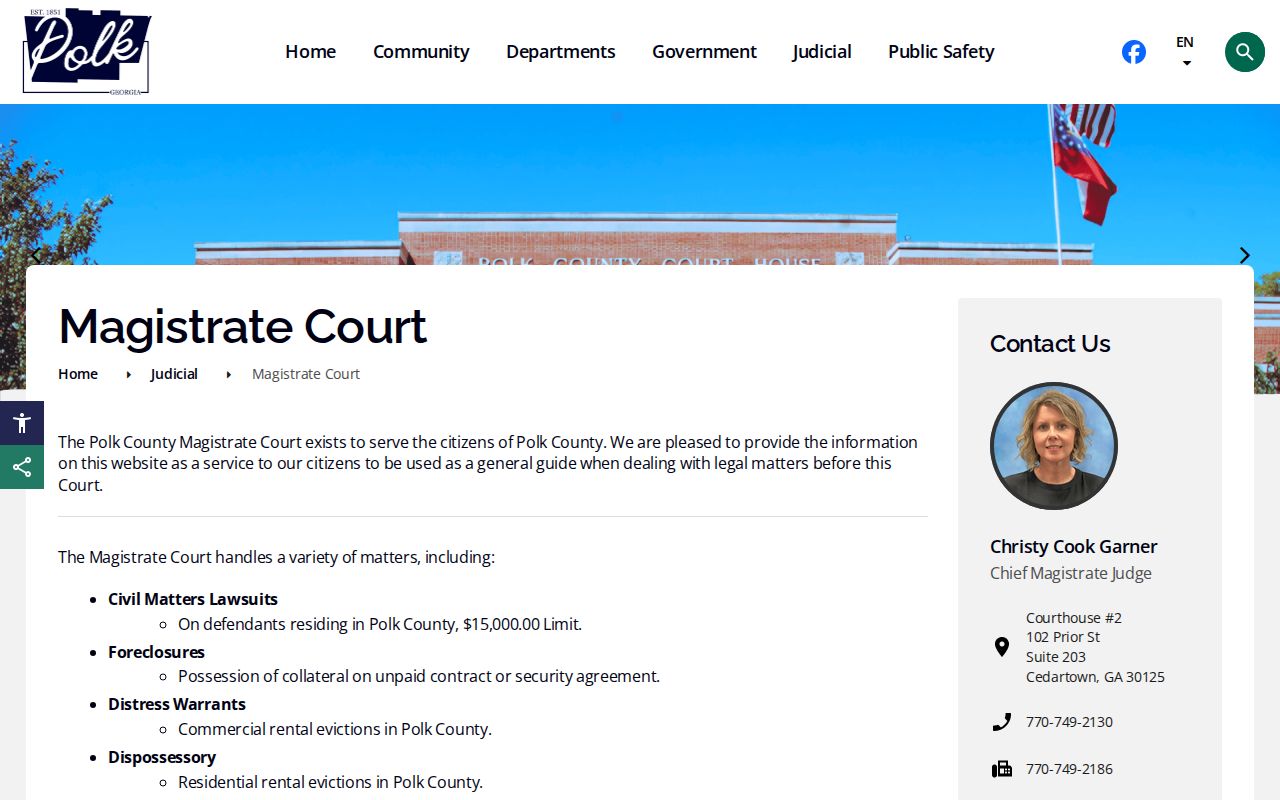
The county page also explains why a search cannot start from a generic Georgia court list. Polk lists no State Court in its official directory. Adding one would steer civil users toward a court the county does not recognize.
Inside a Polk County Civil Docket
Read a civil docket as a sequence. The header gives the court, case number, file type, and filing date. Role labels mark who is plaintiff and who is defendant. They say nothing about the status of the matter. Service entries can show whether the initiating papers were actually delivered. From there, entries may record an answer, motion, hearing, judgment, dismissal, costs, post-judgment work, or appeal. Exact wording varies by court and provider.
| Case Number | The court-issued Case Number; no universal Polk pattern is published. |
|---|---|
| File Type | The portal category, such as Statement of Claim or Garnishment. |
| Service and filings | Returns, answers, motions, and other chronological events when exposed. |
| Judgment Date | The date a judgment was entered, not simply the filing date. |
| Disposition Date | The date the case or event was closed or otherwise disposed. |
In the Magistrate portal, judgment date and disposition date are separate filters. Treat them as the same thing and a matching record can stay hidden. File date is a third idea entirely: it marks when the case or filing entered the system.
Polk Magistrate Civil Search Fields
The Georgia Magistrate Civil Filings form includes Polk in its county list. Fields run in this order: County, Last Name, First Name, File Type, Case Number, File Date range, Judgment Date range, and Disposition Date range. Dates use month/day/year format. At least one criterion is required, and Search and Clear buttons sit at the ready. The form needs no login and posts no search fee notice.
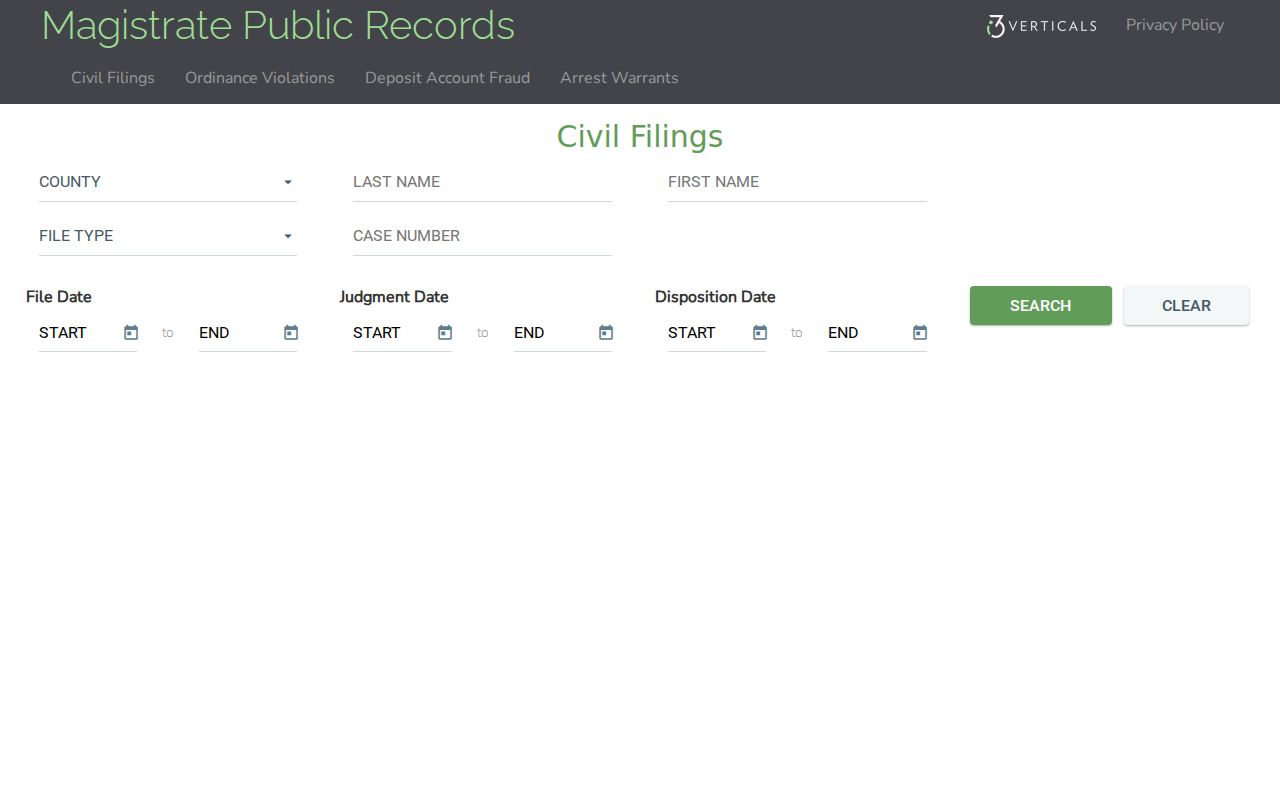
This search shell is built for finding an index entry, nothing more. It promises no document images and lists no copy prices inside the form. Start with one narrow field, then add date ranges only when they help separate results.
Civil Case Types on the Docket
Polk County civil dockets span several kinds of court work. Whichever court is named on the case decides both the search route and the clerk who can produce a copy. Keep Magistrate portal labels exactly as written, since each one marks a distinct file type rather than a loose keyword.
- Statement of Claim for a Magistrate civil claim.
- Dispossessory for a court action seeking possession.
- Garnishment tied to a money judgment or claim.
- Foreclosure involving possession of collateral under the court's stated jurisdiction.
- Abandoned Property, Abandoned Vehicle, Interrogatories, and Mechanic's Lien matters.
A Superior civil case can move from complaint or petition to service, answer, motions, scheduling, judgment or settlement, post-judgment activity, and appeal. The docket records that sequence step by step. What it cannot do is replace the pleadings or the signed orders themselves.
Polk Civil E-Filing Uses Separate Doors
Civil e-filing in Polk runs through two separate doors. Superior Court points filers to PeachCourt. Magistrate Court links to eFileGeorgia, which works through a registration and username/password path. Remember that filing a document and searching a public index are different tasks. An account for one does not mean every document is free for anyone to view.
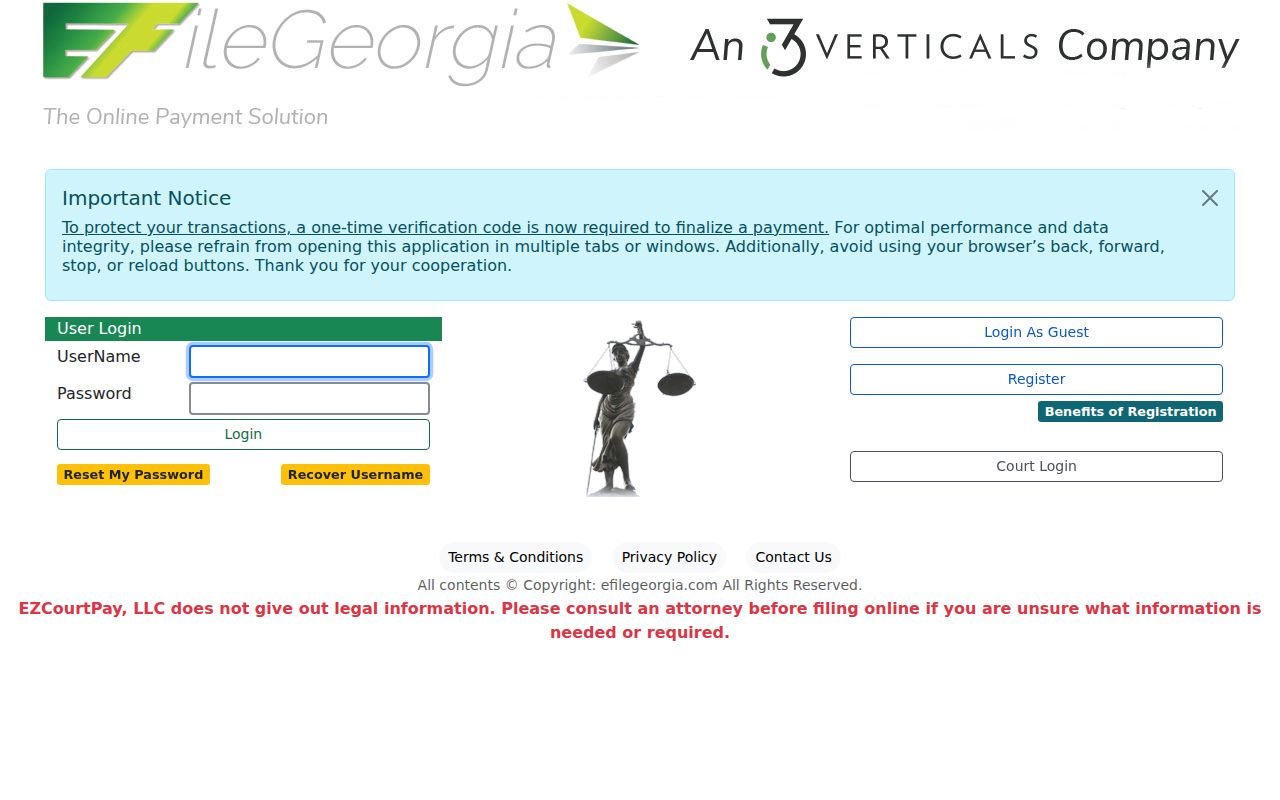
The eFileGeorgia screen marks the Magistrate filing route. For Superior work, PeachCourt or the public terminal is the relevant path. Note the Superior clerk's 4:00 p.m. cutoff for same-day e-filings.
Civil Docket Settings and Hearings
A hearing setting is one event in the civil case, never the outcome. Scheduling orders set deadlines and later hearings. Motions can get settings of their own, and a continuance can bump an earlier date. Read the latest chronological entry, then confirm any active hearing with the responsible clerk. Polk Superior publishes calendars through JusticePath, and Magistrate offers a Polk-enabled calendar search.
Check the docket again near the hearing date. A reset can land after an older calendar was saved. Write down the date, time, court, event type, room or judge if shown, and status. The full Polk County court dates process covers the separate calendar channels. It also explains how to confirm a changed setting.
Polk Civil Fees Depend on Custodian
The Magistrate fee schedule is the one with hard numbers. A civil action starts at a $100 base, then adds $50 for each additional defendant. Filing a dispossessory runs $90. Garnishment costs $100. Sheriff service adds $50 for papers other than dispossessories, or $25 for dispossessory service, so treat these as filing and service charges rather than a universal fee to view a docket.
| Magistrate item | Published amount |
|---|---|
| Plain copy | $0.50 per page |
| Certified copy | $2.50 plus $0.50 per added page |
| Fax or email copy | $2.50 first page, then $1.00 per page |
| Certified mail | $10.00 |
Those Magistrate rates only cover one court. Superior Court lists a $213 civil filing charge plus a $50 service amount, though it does not publish a full civil copy table. Before you order anything, ask the right clerk for a current estimate.
Polk Civil Index Is Not the File
A free Polk County case lookup can hand you the case number, the file type, key dates, and a status line. What it withholds is the paper itself. No complaint, no answer, no exhibit, no return of service, no judgment. When you need a specific document, go through the court clerk or GSCCAA eCertification. That applies to an eligible certified digital copy. Only the certified copy carries the clerk's authentication. A screen view proves nothing.
The Superior clerk also links the Kofile QuickLink portal. It serves indexed land-related records and document books. It is not a general Polk County civil docket search. So don't lean on it for case filings.
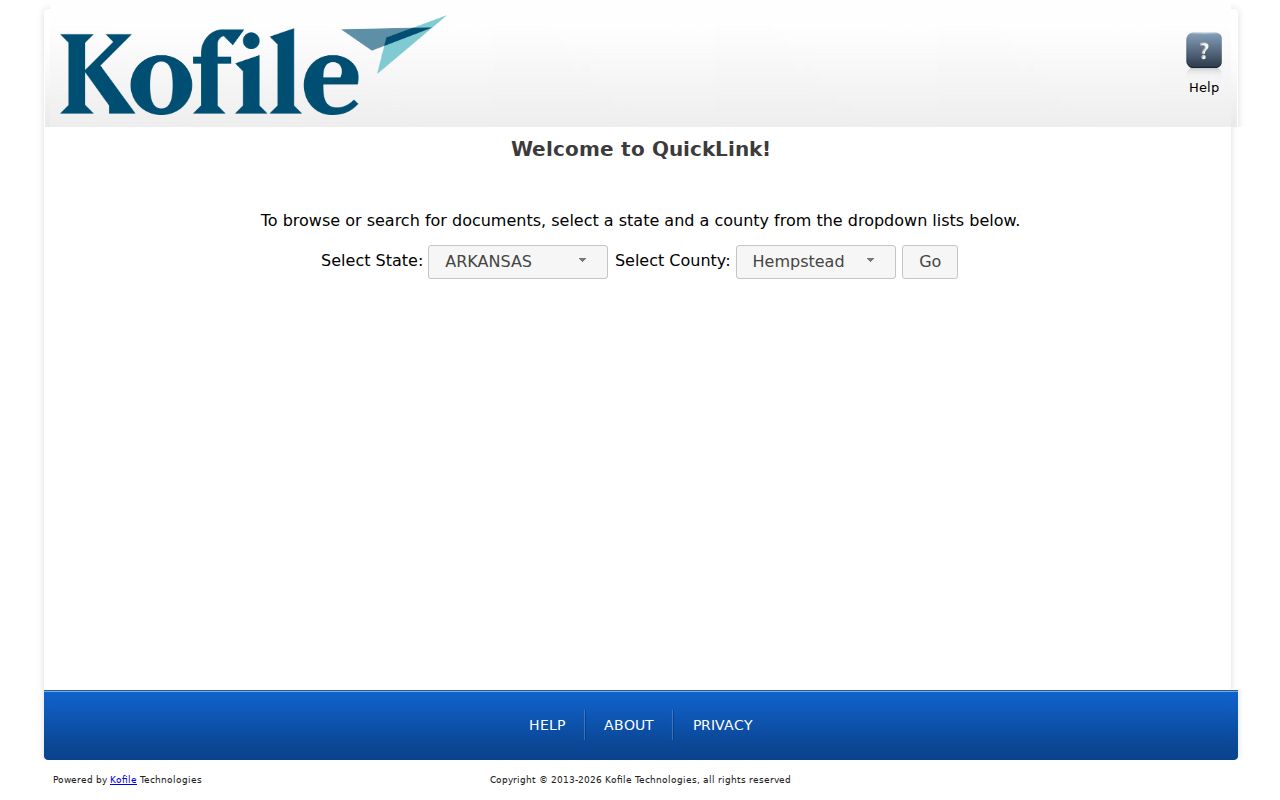
The indexed-record screen does have a use. It separates deeds, liens, and similar records from actual lawsuits. A lien index may point toward a dispute, but it will never give you the civil case event history, which lives in the court docket itself.
Civil Docket Access Rules
Most civil docket events are public, but access has limits. Redaction, a sealing order, and category-specific rules all apply. A public case header does not open every attachment. Court rules let the clerk withhold protected identifiers along with family-violence or stalking information. Juvenile and other confidential matters sit behind their own clerk-controlled access process. They stay apart from the ordinary court records view.
The Georgia Superior Court Clerks' Cooperative Authority backs both certified-document and indexed-record services. Each one has a defined scope, so match the service to what you actually need.
Think of the Authority screen as a records and certification layer rather than a full Polk civil docket database.
Access rules:
O.C.G.A. §§ 50-18-70 through 50-18-71 describe Georgia public-record policy and custodian-directed requests, subject to exemptions.
Uniform Superior Court Rule 21 addresses access limits and protected identifiers in Superior Court files.
Polk County NextRequest works for general county administrative records. It is not a way around a court restriction. For a civil court document, first identify the case. Then ask the clerk that maintains it, since the clerk may hand over a public redacted copy, explain certification, or spell out the legal reason access is limited.