
Getting Polk County Court Records
Begin with the court, not just a party name. The Polk County Judicial System directory sorts the offices for you. Stacie M. Baines, Clerk of Superior Court, holds Superior civil files and felony criminal cases. Magistrate Clerk Jayme Eason keeps Magistrate civil matters, ordinance cases, warrants, and related records. Probate carries estates, wills, guardianships, vital records, weapons applications, and misdemeanor traffic files. Juvenile records belong to that court's clerk, under strict limits. City clerks handle municipal traffic and ordinance citations.
You can search a public terminal in the Superior clerk's office, use a court-linked portal when it covers the category, call, visit the counter, or mail a narrow request. Polk County also links NextRequest for general county open records, though a court-file request should go to the clerk who actually has custody.
- Identify the court, case number, parties, and approximate year.
- Name the exact docket sheet, order, judgment, or pleading.
- Ask whether online, counter, mail, or electronic delivery is available.
- Request a cost estimate and specify plain or certified copies.
- Confirm identity, redaction, and delivery rules before paying.
The phone lines are direct: Superior's records counter at 770-749-2114, Magistrate's clerk at 770-749-2187, and Probate at 770-749-2128. Staff will walk you through procedure, but they cannot hand out legal advice or run a criminal search on your behalf.
Polk Court Record Layers
Three layers exist here. A docket entry is only the chronological index. It can note that a motion or order was filed without showing the document itself. The filed document is the actual text the court accepted. A certified copy goes one step further, carrying the clerk's authentication on top.
- Docket entry
- A dated event line describing a filing, setting, ruling, or disposition.
- Filed document
- The pleading, motion, order, judgment, or attachment behind an entry.
- Certified copy
- A copy authenticated by the responsible clerk.
The Georgia E-Access directory points users to providers and lists PeachCourt for Polk Superior Court. It is not a single statewide store of every docket and document, so expect gaps.
Polk County Court Record Types
Each Polk County court keeps what its jurisdiction produces. Superior files hold major civil disputes, felony cases, orders, judgments, and docket sheets. Magistrate records cover claims up to $15,000, plus dispossessories, garnishments, foreclosures, preliminary hearings, and ordinance matters. Probate files include estates, wills, guardianships, and misdemeanor traffic. Municipal clerks keep the city citations.
- Docket sheets and case summaries
- Pleadings, motions, answers, and attachments
- Signed orders, judgments, and dispositions
- Probate petitions and guardianship filings
- Traffic and ordinance case records
Deed, lien, and UCC indexes are public records, but they stand apart from a court case file. A calendar setting tells you a date, not the whole file.
Polk Court eCertification Route
The GSCCCA eCertification portal delivers digital certified documents from participating Georgia courts. You create a universal account, sign in, and follow the prompts. An existing certificate can be verified with its authentication code. The responsible clerk still decides availability.
The official page makes no Polk-specific promise on delivery time. It also says nothing firm on identity rules, price, or eligibility for every old file. Ask the clerk before paying when a record is urgent. The portal is a delivery route only. It is not proof that all Polk County court records are digital.
This official eCertification view shows the entry point.
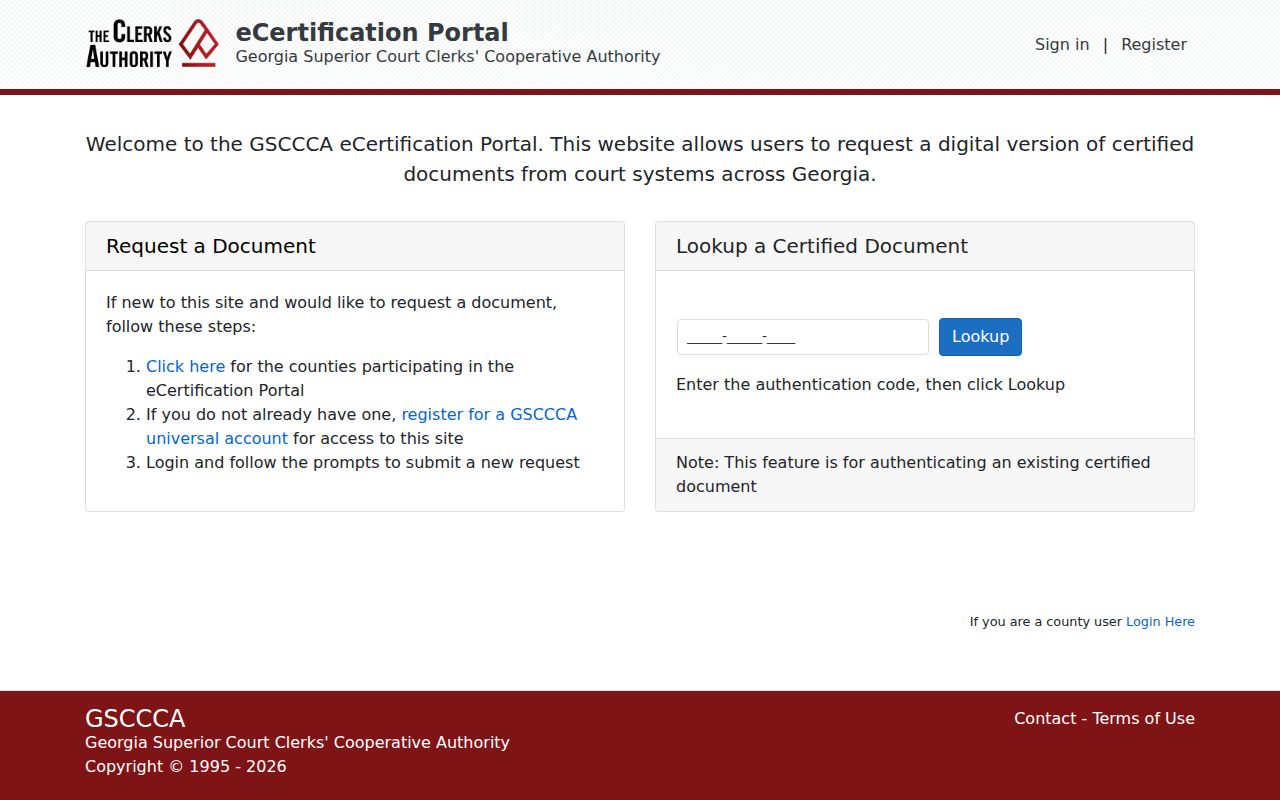
Its account and verification tools support certification while the clerk remains the source.
Inside a Polk County Court Record
A full file can hold more than the event list you see online. The fields shift from case to case, but the record usually ties a case identifier to parties, filings, settings, rulings, and status. Protected identifiers may be removed.
| Case number | The unique reference used for a precise request. |
|---|---|
| Parties and court | Names shown by law and the filing court. |
| Docket sheet | Event dates, filing labels, settings, and status changes. |
| Pleadings | Petitions, answers, motions, and related papers. |
| Orders | Signed rulings, judgments, or dispositions when public. |
| Access note | Sealing, confidentiality, or redaction limits. |
When exact language matters, check a portal summary against the clerk's file. For a certified disposition, name that document in your request instead of asking for everything.
Polk Open Records Boundaries
Polk County runs general records requests through Polk NextRequest. That portal answers to the county. It does not answer to court rules. Anything filed in a case stays with the clerk of court. The clerk can black out protected details or refuse a restricted category. The clerk can also insist on a court order first.
The Georgia Attorney General's request instructions suggest putting your request in writing. Send it to the office that actually holds the records. One limit matters here. An open records request covers documents that already exist. An office has no duty to build a new report for you.
The official instructions from the Attorney General lay out each step of that process.
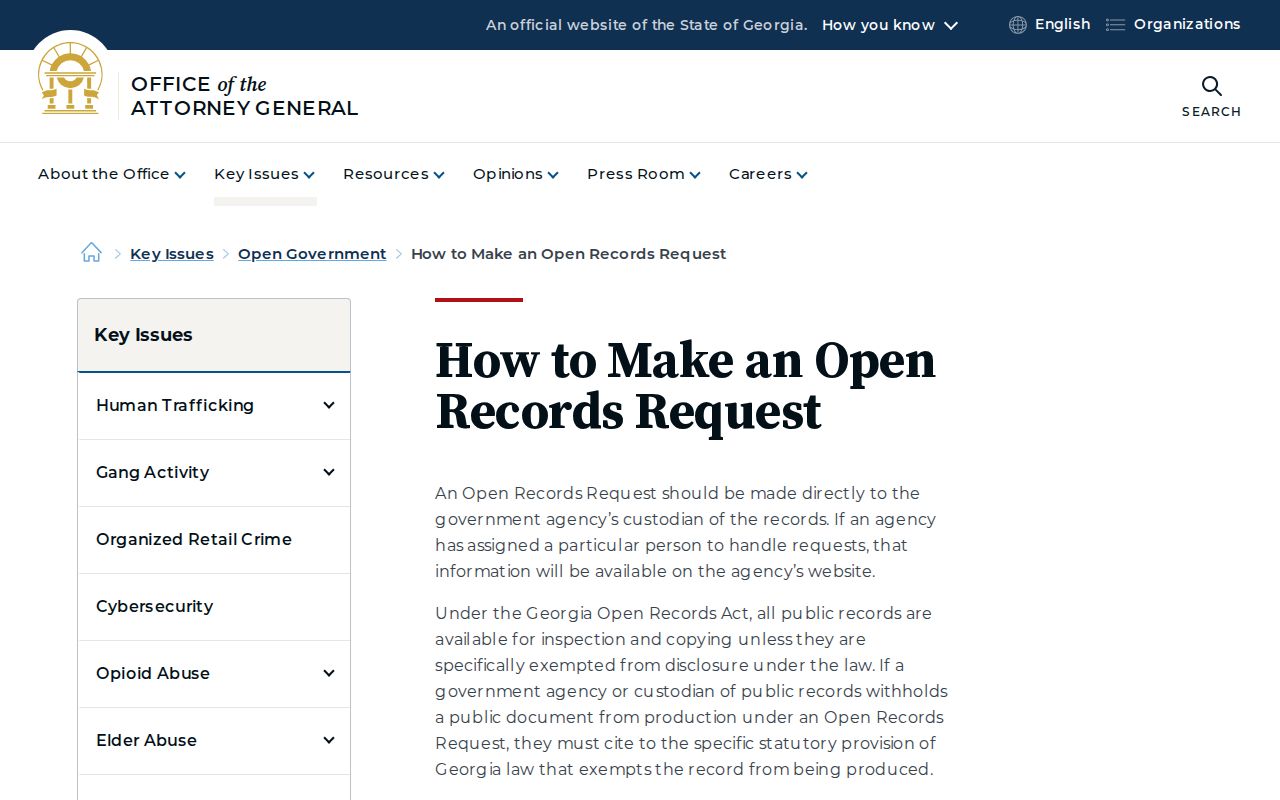
For a Polk court file, choose the Superior, Magistrate, Probate, Juvenile, or municipal clerk.
Fees and Certified Copies
Polk's fee schedule gives exact Magistrate copy rates. Do not apply those numbers to another court without confirmation. General open-record copies carry a separate rate. Superior publishes filing charges but no full copy table.
| Published item | Amount | Scope |
|---|---|---|
| Plain copy | $0.50 per page | Magistrate schedule |
| Certified copy | $2.50 plus $0.50 each added page | Magistrate schedule |
| Fax or email | $2.50 first page, $1.00 each added page | Magistrate schedule |
| Open-record copy | $0.10 per page | County schedule |
Clerk of Superior Court
100 Prior Street, Suite 106
Cedartown, GA 30125
Mail: P.O. Box 948, Cedartown, GA 30125
770-749-2114
Monday through Friday, 8:30 a.m. to 5:00 p.m.
Ask for a current quote first, since page count, staff research, redaction, certification, and delivery all shift the total.
Polk Filing Alerts Have Limits
The free Filing Activity Notification System sends voluntary alerts for certain GSCCCA activity. Polk's own source cautions that notices are not guaranteed to be complete or accurate. So treat an alert as a heads-up. It is not a certified court record.
The official FANS site shows the sign-up screen.
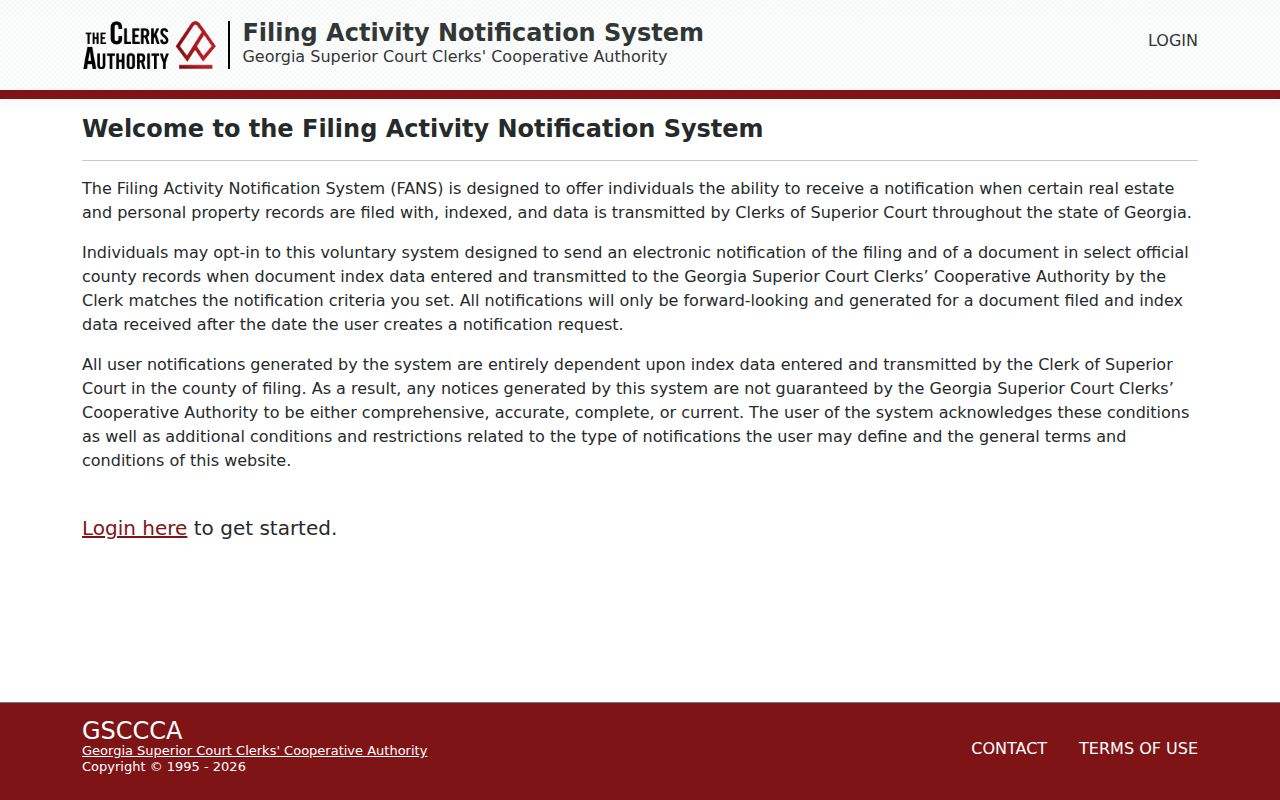
Use an alert to prompt a check, then verify with the index or clerk.
Older Polk Court Files
Polk County publishes no master list of its oldest court files. There is no microfilm range or digitization date to consult. A fee line for pre-2006 Magistrate criminal searches shows one thing. Some old docket work still requires staff time. Superior records from that era may sit in the current system. They may also sit on a terminal, in a paper store, or at a separate archive.
Call with the approximate year, court, party, and case type. Ask whether staff research is needed and request a quote. Kofile QuickLink covers only the record types and index books loaded into it. Continuous online access, in other words, is not the same as a full court archive.
Give staff enough detail to tell similar names apart. Note the type of matter. Note the court that likely heard it, plus a narrow year range. Ask whether the file is indexed under an earlier numbering system. Off-site storage means you should request an estimated retrieval time before you plan a visit. For genealogy or historical research, explain the known dates and relationships yourself. The clerk cannot build a family tree for you.
Once the file turns up, pick the pages you truly need. A docket sheet can identify filings before copies are ordered. A final judgment may answer your question without paying for a large file. Need it authenticated? Ask whether the older paper can be certified at the counter or sent through eCertification. Keep the clerk's quoted reference number with your request. That way any follow-up reaches the same file.
Note: A missing online image does not prove anything. The original Polk County court record may still exist.
Sealed Records and Public Access
Georgia presumes court records are open, but the presumption has limits in Polk County. Sealed matters, protected identifiers, juvenile cases, and certain protective-order material follow their own rules, and a county request cannot override them. Juvenile access is the most restricted of all.
Key rules: The Georgia Open Government FAQ explains exemptions, responses, and copying. The Uniform Superior Court Rules address access and protected identifiers.
The official guidance appears in this FAQ source capture.
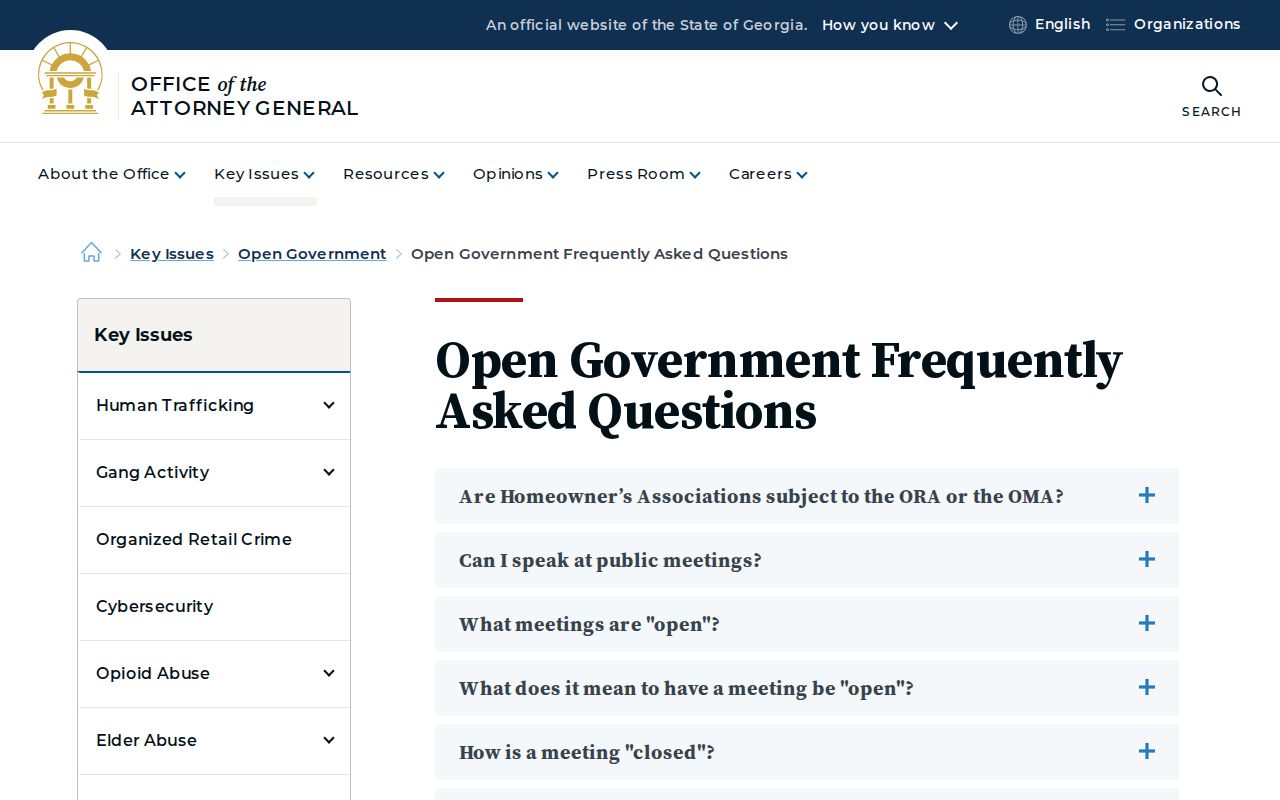
When the law blocks release, ask about a redacted copy, a docket entry, or a court-order process instead.