
Searching Polk County Criminal Dockets
Pick the case category first. The Polk County Superior Court clerk page sends Superior civil and criminal users to PeachCourt and notes that a public terminal is available. Elected clerk Stacie M. Baines keeps the felony docket. Her office will not run a broad criminal search for a requester, so handle name-only inquiries through the provider or the terminal. Give the court and an approximate year. Add the case number when you have it.
Polk County has no single criminal database. Magistrate Court takes warrant applications, preliminary hearings, bail hearings for non-capital offenses, peace bonds, bad-check matters, and county ordinance cases. Misdemeanor traffic sits in Probate Court. Municipal courts handle city traffic and ordinance cases, and Juvenile Court keeps delinquency and juvenile traffic files. That split makes choosing the right court as important as spelling the name correctly in a docket search.
- Identify whether the matter is felony, Magistrate process, traffic, ordinance, juvenile, or federal.
- Use PeachCourt or the Superior clerk terminal for a Polk County felony docket.
- Use the Polk-enabled Magistrate modules for ordinance or deposit-account-fraud records.
- Open the matching record and compare the case number, court, charge, and date.
- Ask the responsible clerk for a specific copy or certified document when the index is not enough.
Polk Criminal Search Starts at PeachCourt
Polk Superior Court points users to PeachCourt. The PeachCourt public landing page sets out an account and registration path rather than a free, county-specific set of search fields. Georgia's E-Access directory lists Polk Superior with PeachCourt too. A directory is not one statewide search box, though. When the account route does not surface the case you need, use the public terminal in the Superior clerk's office at 100 Prior Street, Suite 106, Cedartown. You can also call 770-749-2114. Ask the clerk about the specific file.
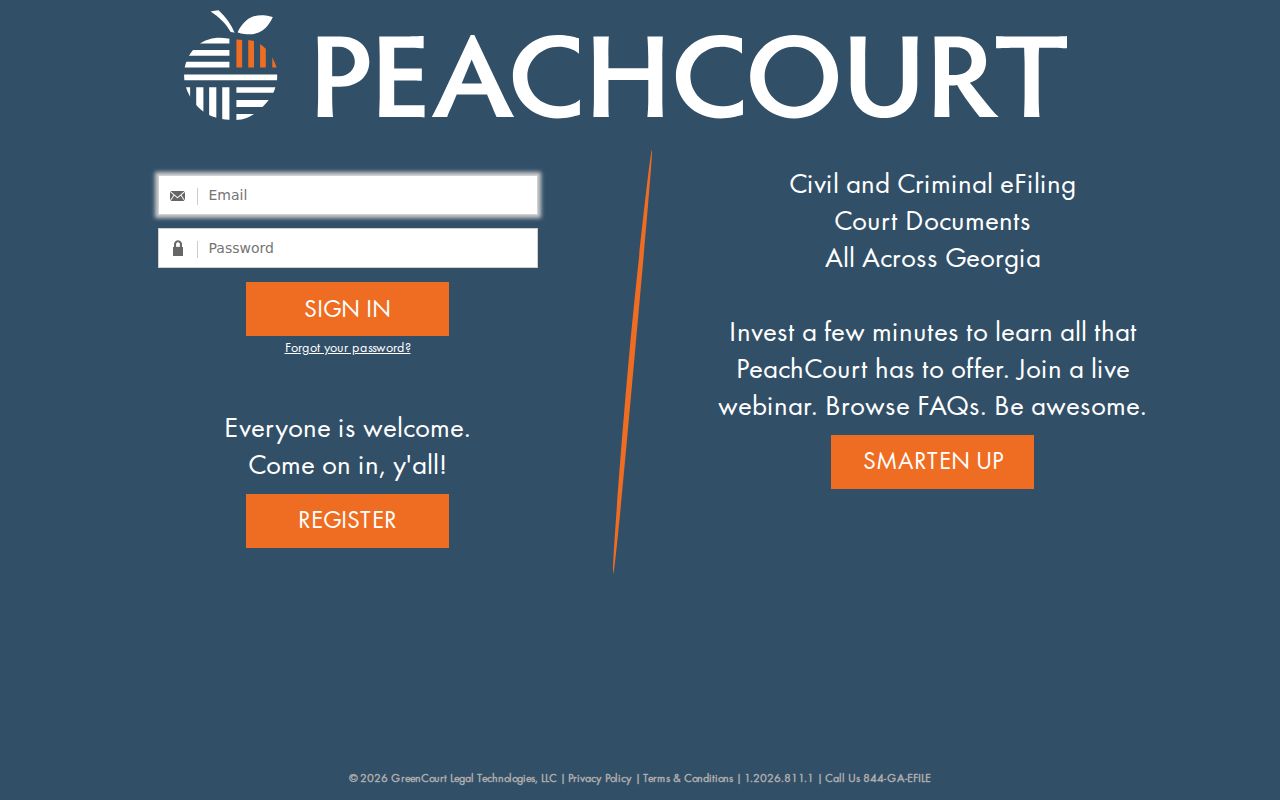
A portal login and a public court terminal are separate doors. Neither is a promise that every Polk County criminal document is online. Treat the provider screen as one channel among several.
Inside a Polk County Criminal Docket
Think of a Polk County criminal docket as a timeline. The header names the court, division, case type, filing date, and assigned identifier. Later blocks may hold the charge and statutory citation. Bond action, hearing settings, filings, the disposition, sentence details, financial entries, document links, an appeal indicator, or a redaction notice may appear too. Labels vary. Read them exactly as the provider displays them. Polk has published no universal criminal case-number pattern. So never build a case number from a guessed format.
| Case identifier | The court-assigned Case Number; copy it exactly. |
|---|---|
| Charge block | Charge description, statute, count, and felony or misdemeanor class when shown. |
| Bond block | Amount or type, release, action, or forfeiture as entered by the court. |
| Settings | Arraignment, motion, pretrial, plea, or trial events and their status. |
| Disposition | The recorded outcome; a summary is not the certified sentencing order. |
A setting is not a finding of guilt. A plea or outcome line may not be the full order either. Use terms like dismissal, nolle prosequi, dead docket, conviction, acquittal, probation, and bond forfeiture only when those words appear in the official record.
Polk Warrant Portal Has a Gap
The Georgia Magistrate arrest-warrant search offers several fields. These cover last name, first name, warrant number, an offense-date range, and an issued-date range. Polk is not among the counties listed on that form. That gap does not mean no warrant or case exists. It is simply not a working Polk search route.
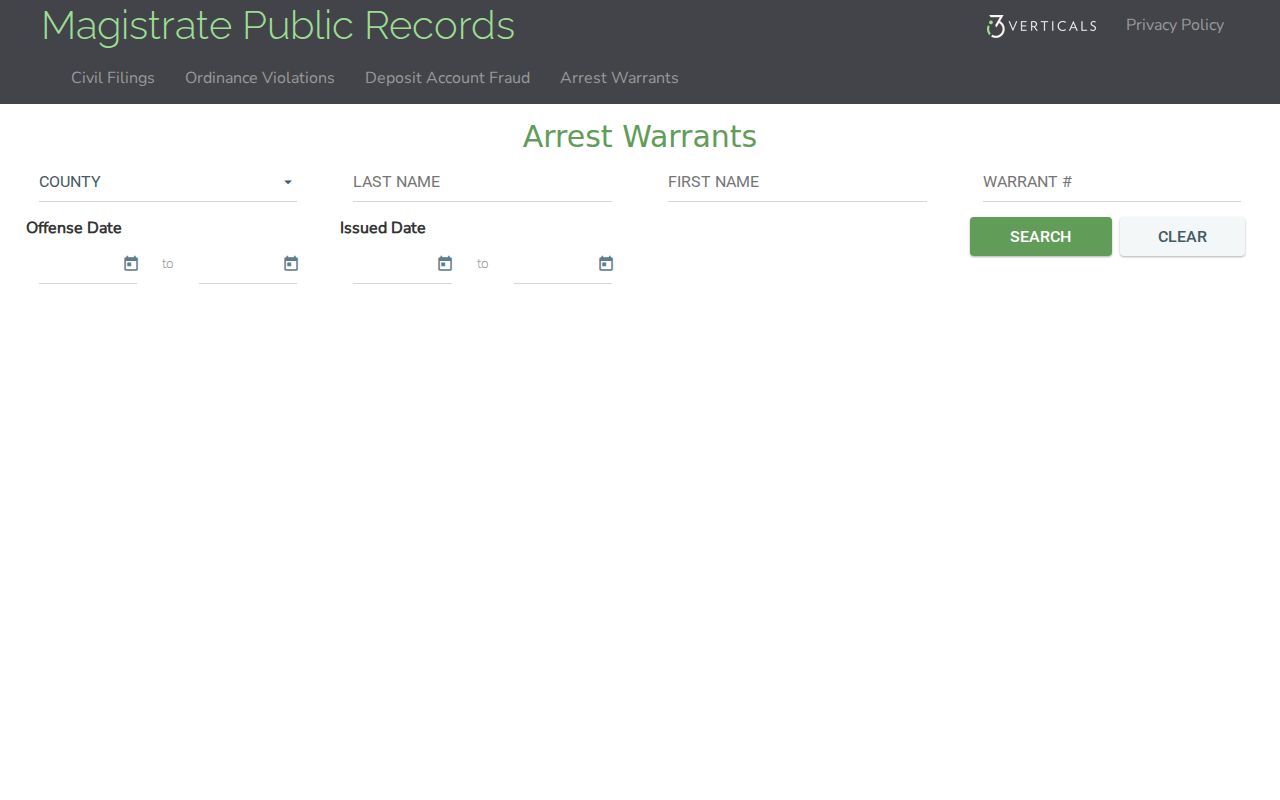
For Polk Magistrate process, call the Magistrate clerk at 770-749-2187. The court itself answers at 770-749-2130. Polk does appear in the portal's separate ordinance and deposit-account-fraud modules, so check each category on its own terms.
How a Criminal Case Moves
A felony docket usually opens with a filing or indictment. Bond or first-appearance activity may follow. Arraignment is the formal stage where the charge is addressed and plea procedure begins. Discovery, motions, and pretrial settings come next as needed. The record may then show a plea or trial, an outcome, sentencing, and appeal-related activity. Not every case hits every step, and a changed setting does not mean dismissal.
Docket flow: Filing or Indictment › Bond or First Appearance › Arraignment › Motions and Pretrial › Plea or Trial › Disposition › Sentencing
Magistrate work serves a different purpose. A preliminary hearing can test whether a felony case should advance, but it is not the Superior trial. Bail and warrant proceedings also create lower-court events before a felony case reaches its later Superior stages.
Polk Docket Entries Are Not Orders
A docket entry tells you an event or filing exists. It rarely shows the paper behind the entry. The indictment, motion, plea paper, sentencing order, or certified judgment may sit deeper in the file. PeachCourt account access can help. So can the clerk terminal or a targeted copy request. GSCCCA eCertification is a separate route for eligible digital certified court documents.
Ask where an older file is stored before paying. Polk's fee schedule lists a $40-per-hour research charge for pre-2006 criminal files. That charge appears in its Magistrate section. Do not assume that rate applies to Superior Court without confirmation. Name the year, the court, the case number if known, and the exact document sought. That keeps the request narrow. It also lets the right clerk explain current copy terms.
Courts That Hold Criminal Dockets
Polk County splits its criminal dockets across several courts. Felony cases sit in Superior Court. Magistrate Court handles early criminal process plus listed county ordinance matters. Probate Court takes misdemeanor traffic. The cities matter too. Cedartown, Rockmart, Aragon, and Braswell each keep their own municipal traffic and ordinance records. Juvenile Court holds delinquency and juvenile traffic files. No Polk State Court shows in the official county court directory.
Federal charges live on a different map. Polk County falls inside the Northern District of Georgia's Rome Division. So a federal docket runs through PACER or CM/ECF, never PeachCourt. The PACER case-search portal needs its own account. It follows federal access rules, not county ones.
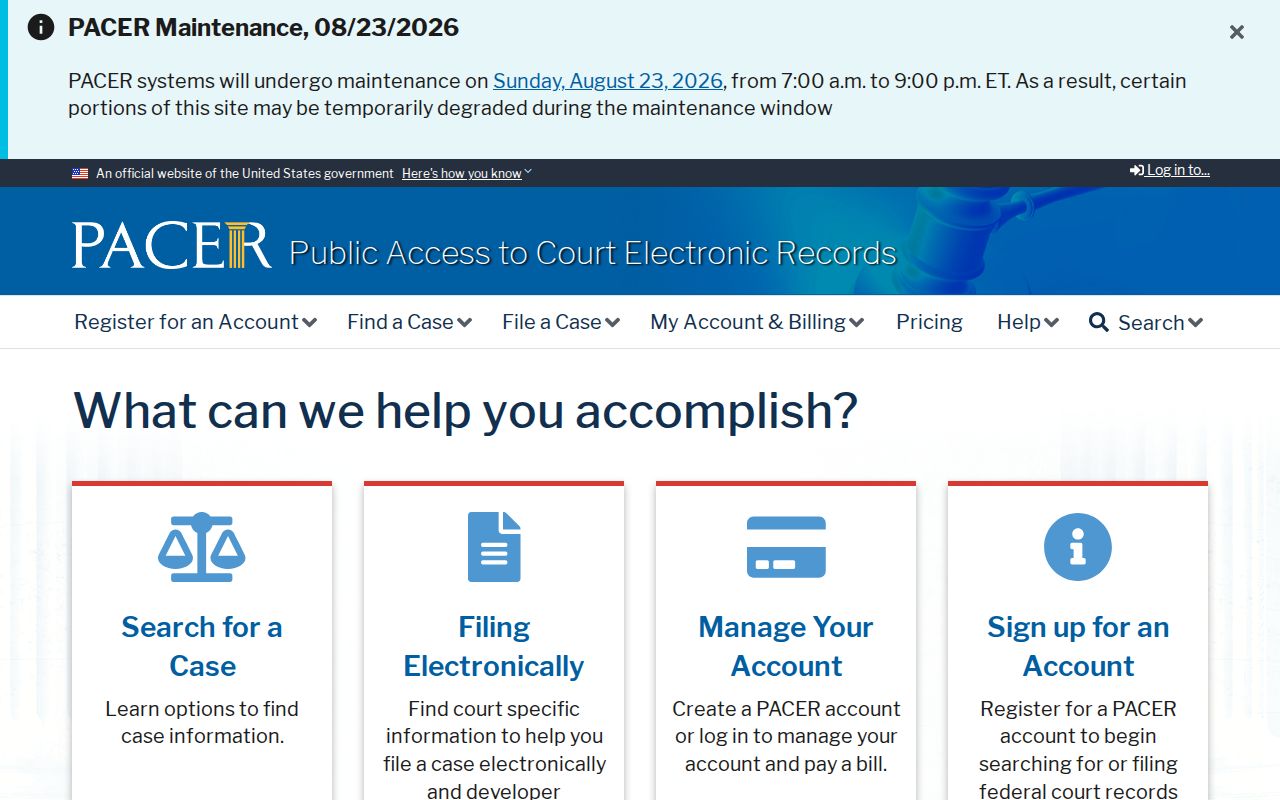
The federal screen draws the line. A Polk County case can still sit on a federal docket that no county clerk maintains at all.
Polk Superior Clerk Terminal Route
When the provider comes up empty, go to the source. The official Superior Court page confirms a public search terminal at the clerk's office. Staff there will not run criminal searches for you. Visit Suite 106 at 100 Prior Street in Cedartown. Hours run 9:00 a.m. to 5:00 p.m. weekdays. The phone number is 770-749-2114.
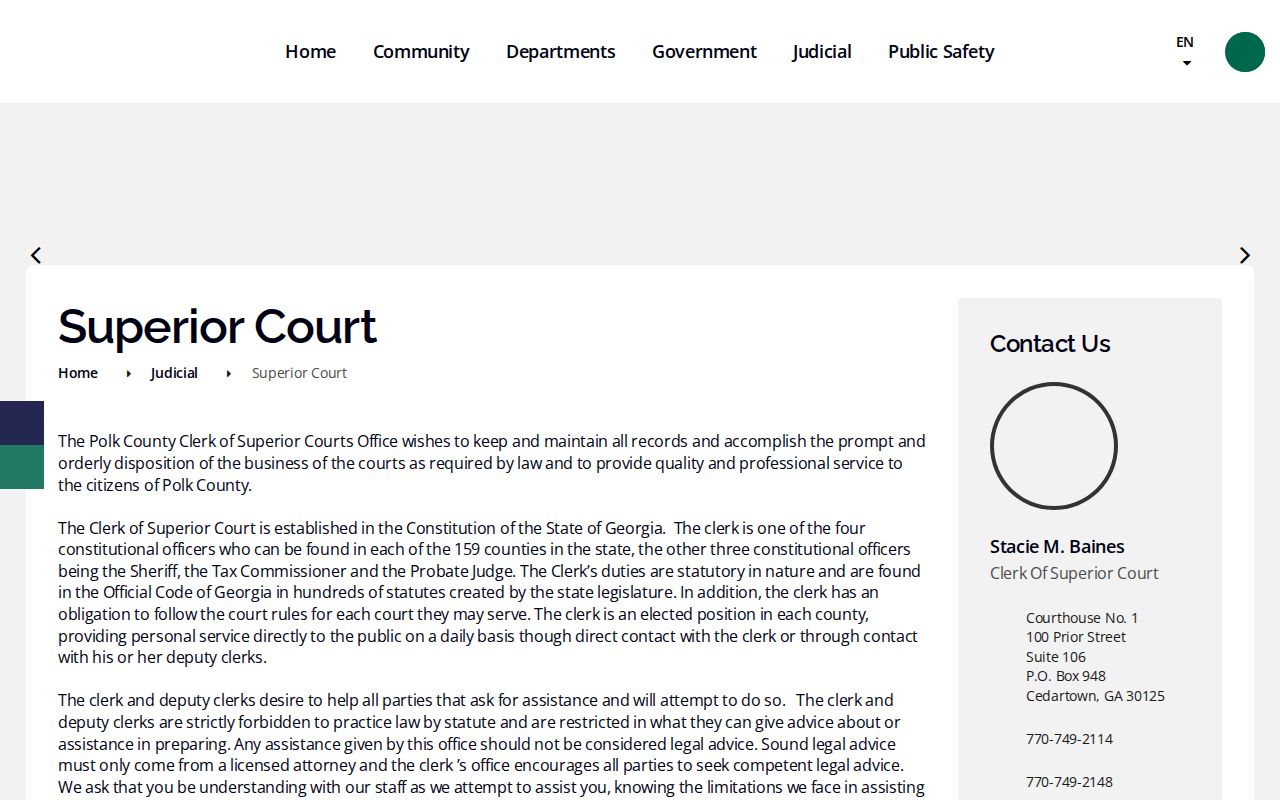
The split is clear from that statement. You search at the terminal or through the provider yourself. The clerk, in turn, can answer a focused request for an identified record.
Polk Juvenile Criminal Records Stay Separate
Juvenile Court covers Polk County delinquency and dependency matters. It also handles children in need of services, juvenile traffic, termination, and related child matters. There is no general public name-search form for those files. Access runs through a clerk-controlled process shaped by Georgia confidentiality rules. It works differently from a PeachCourt felony lookup. The Juvenile Court page adds that the clerk accepts original documents only. That matters for filing rather than searching.
Never treat a missing public result as proof that no juvenile matter exists. Call the Juvenile clerk at 770-749-2151 and ask about the lawful access procedure. Stop if a record is marked confidential. NextRequest cannot substitute for that process. Even a confirmed public docket event should not lead you to repeat protected child information or identifying details.
Sealed Dockets and Public Access
Georgia law leans toward openness, but not every criminal file is public. A case header can appear. A sealed filing, a redacted page, or a protected identifier stays hidden. Juvenile delinquency sits in its own clerk-controlled system. Protective-order details, personal identifiers, and court-sealed material may be withheld. Other docket events can stay open.
Key rules:
O.C.G.A. §§ 50-18-70 through 50-18-71 set Georgia's public-record policy and direct requests to the responsible custodian, subject to exemptions.
Uniform Superior Court Rule 21 governs limits on access to Superior Court files and protected identifiers.
Stop the moment an official system flags a record as restricted, sealed, confidential, or unavailable. Ask the responsible court whether a redacted public copy exists. Ask what lawful procedure governs it. Polk County NextRequest covers general county records, not court-file rules. For another route, the contextual Polk County case lookup explains court ownership. That ownership shapes name and number searches.